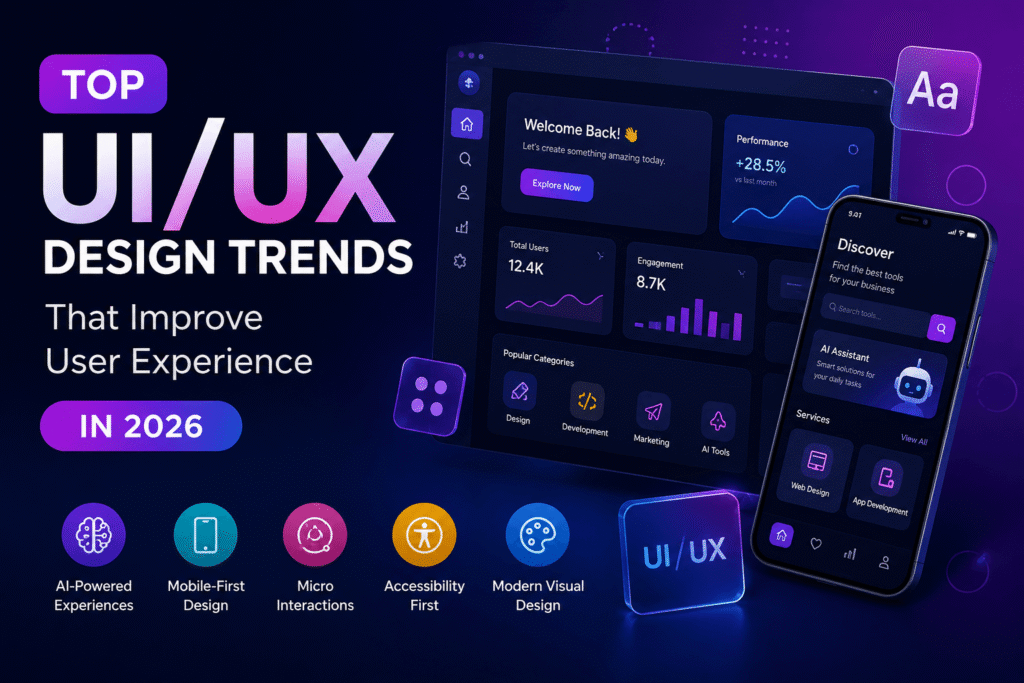
Top UI/UX Design Trends That Improve User Experience in 2026
In today’s competitive digital landscape, exceptional UI/UX design has become a necessity rather than a luxury. Users expect websites and applications to be intuitive, fast, visually appealing, and accessible across all devices. Businesses that invest in modern user experience design not only increase customer satisfaction but also improve engagement, conversions, and brand loyalty.
As technology continues to evolve, so do user expectations. Artificial Intelligence, personalization, accessibility, and immersive experiences are shaping the future of digital products. Here are the top UI/UX design trends that are defining user experiences in 2026.
1. AI-Powered Personalized User Experiences
Artificial Intelligence is transforming how users interact with websites and applications. Instead of showing identical content to every visitor, AI analyzes user behavior, preferences, and browsing history to deliver personalized recommendations, customized dashboards, and intelligent search results.
- Personalized content recommendations
- Smart product suggestions
- AI chatbots for instant support
- Predictive user behavior analysis
2. Minimalist Interface Design
Clean layouts with generous white space continue to dominate modern UI design. Minimal interfaces help users focus on important information while reducing distractions. Simple navigation and consistent visual hierarchy improve usability and create a premium user experience.
3. Voice User Interface (VUI)
Voice interactions are becoming increasingly popular thanks to AI assistants and smart devices. Modern applications are integrating voice commands for searching, navigation, and accessibility, making digital products more convenient for users.
4. Microinteractions
Small animations and interactive feedback provide users with visual confirmation of their actions. Whether it’s a button animation, loading indicator, or success message, microinteractions make interfaces feel responsive and engaging.
- Button hover effects
- Animated notifications
- Progress indicators
- Interactive icons
5. Accessibility-First Design
Inclusive design is becoming a core requirement rather than an optional feature. Websites should be usable by everyone, including people with disabilities. Accessibility improves user experience while ensuring compliance with international standards.
- Keyboard navigation
- Screen reader compatibility
- High contrast color schemes
- Readable typography
6. Advanced Dark Mode
Dark mode continues to grow in popularity because it reduces eye strain and improves battery life on OLED devices. Modern interfaces allow users to switch between light and dark themes while maintaining a consistent brand identity.
7. Motion Design and Smooth Animations
Animations guide users through interfaces and create more engaging experiences. Purposeful motion can improve navigation, highlight important actions, and provide meaningful visual feedback without overwhelming the user.
8. Mobile-First Design
With the majority of users browsing from smartphones, mobile-first design has become the industry standard. Responsive layouts ensure seamless experiences across mobile phones, tablets, and desktop devices.
- Responsive layouts
- Touch-friendly navigation
- Fast loading pages
- Optimized mobile performance
9. Glassmorphism and Modern Visual Effects
Glassmorphism, subtle gradients, soft shadows, and layered interfaces continue to enhance visual appeal. These design elements create depth while maintaining simplicity and elegance.
10. Data-Driven UX Decisions
Successful UI/UX design is no longer based on assumptions. Designers use analytics, heatmaps, A/B testing, and user feedback to continuously improve interfaces based on real user behavior.
Benefits of Following Modern UI/UX Trends
- Higher customer satisfaction
- Improved conversion rates
- Better search engine rankings
- Increased user engagement
- Stronger brand credibility
- Reduced bounce rates
Final Thoughts
UI/UX design in 2026 is focused on creating intelligent, personalized, and accessible digital experiences. Businesses that embrace AI-powered interfaces, responsive design, accessibility, and user-centered design principles will stay ahead of the competition while delivering exceptional customer experiences.
Whether you’re building a new website, mobile application, SaaS platform, or enterprise software, investing in modern UI/UX design can significantly improve user engagement, customer retention, and business growth.